

MD&A · 2025
In this section4 topics
Overview of Operations
Overview — Introduction
The following analysis and discussion are prepared for the consolidated financial statements for the years 2023, 2024, and 2025. They should be read in conjunction with the notes to the consolidated financial statements. The Company's financial statements have been prepared in accordance with Thai Financial Reporting Standards (TFRS), and the financial statements for the fiscal years 2023, 2024, and 2025, as specified in this section, are presented on a consolidated basis.
Overview of Operations
Overview of Operating Performance for Fiscal Years 2023 - 2025
The Group provides vessel services for transportation and storage of crude oil, refined petroleum products, and chemical products, as well as vessels supporting offshore petroleum exploration and production. It also offers comprehensive ship agency and customs clearance services. The services are categorized into 5 business types: 1) Petroleum and Chemical Tanker (PCT) business, 2) Crude Oil Carrier (COC) business, 3) Floating Storage Unit (FSU) business, 4) Offshore Support Vessel (OSV) business, and 5) Ship Agency and Customs Clearance (SAS) business, with revenue proportions by business type for 2023 - 2025 as follows:
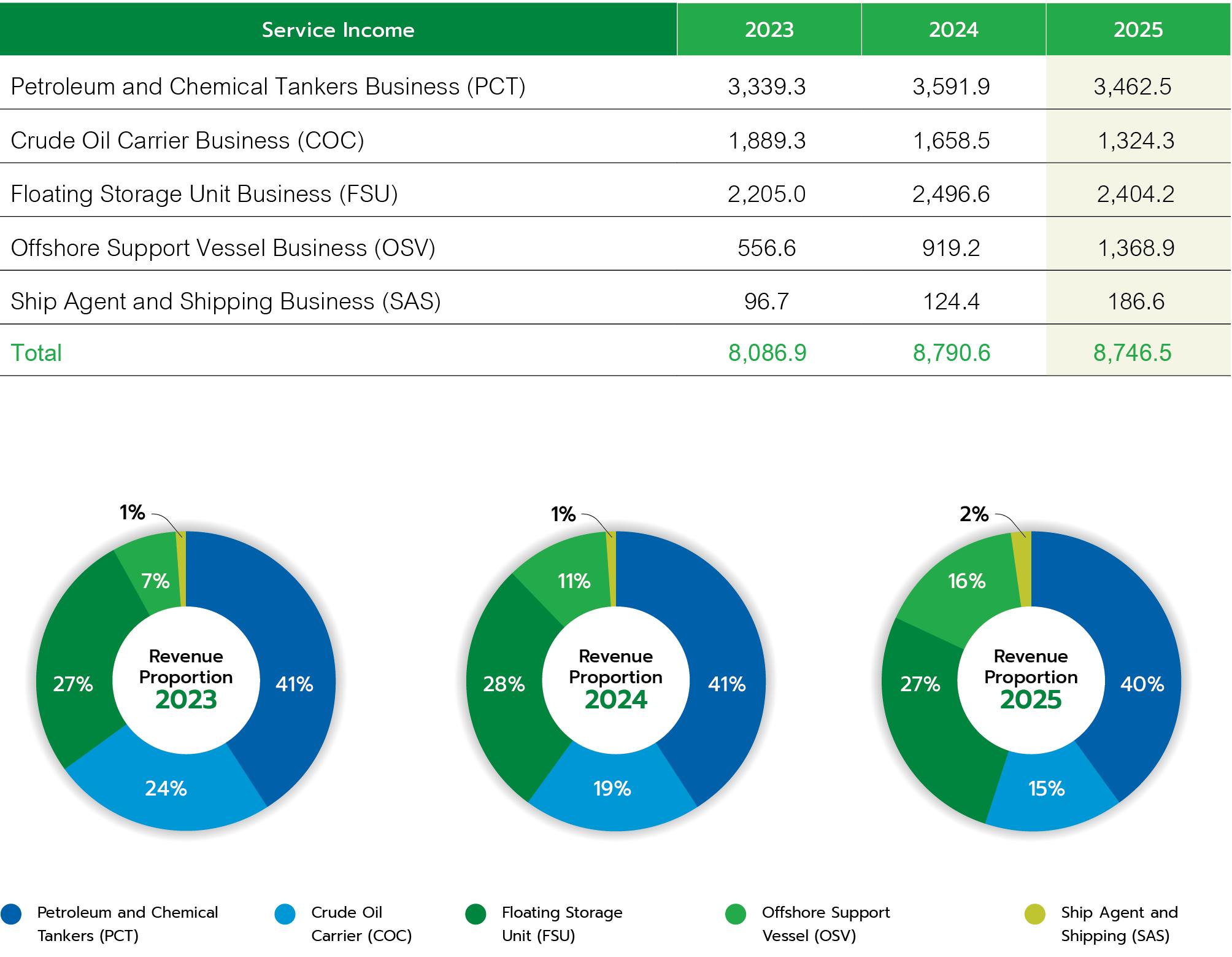
Over the past three years, the Company has demonstrated the strength of its strategy in business restructuring and investing in long-term revenue-generating assets. This has focused on the Offshore Support Vessel (OSV) business and the Petroleum and Chemical Tanker (PCT) business, particularly in the chemical fleet, under long-term Time Charter and Bareboat Charter contracts. This has resulted in more predictable revenue and stable cash flow.
In 2023, the Company maintained a strong operating performance, despite a slowdown in the Floating Storage Unit (FSU) business due to the backwardation in the oil futures market. The COC business operated all three VLCC vessels at full capacity throughout the year, effectively offsetting the reduced revenue from FSU. Additionally, profits from the sale of some vessels contributed to the Company achieving a net profit of 2,214.0 million Baht.
The year 2024 was a year of continued sustainable growth. Revenue and gross profit grew consistently due to the expansion of the OSV fleet and the addition of chemical tankers in international markets. Although the Company restructured its business operations and fleet, accepting some short-term revenue reduction to generate more stable long-term returns, both full-year revenue and net profit continued to grow. Net profit reached 2,249 million Baht, an increase from the previous year, reflecting the quality of revenue and strong operations.
The year 2025 presented short-term challenges for the Company, including the dry-docking of VLCC and AWB vessels and the adjustment of the FSU fleet during the first half of the year, as well as impacts from exchange rates and the Thai-Cambodian border situation. Nevertheless, the expansion of the OSV fleet by an additional 7 vessels and the recovery of the FSU business supported the achievement of operational growth targets. This resulted in the Company's total revenue reaching 8,746.5 million Baht, similar to the previous year. The gross profit margin increased to 36.5 percent, and net profit stood at 2,283.7 million Baht, the highest in three years.
Overall, the Company's revenue structure has shifted towards a higher proportion of long-term contracts, reducing market cyclical volatility. Concurrently, supporting businesses like SAS enhances the completeness of the value chain. Despite being affected by external factors at times, the Company has managed costs, finances, and investments with discipline, leading to stable and sustainable operational growth throughout 2023 – 2025.
Driving Business Towards Sustainability (ESG)
Throughout 2023 – 2025, the Company operated within a sustainable development framework, integrating environmental, social, and governance (ESG) dimensions into its corporate strategy to foster stable growth alongside responsibility towards all stakeholders.
Environmental
The Company prioritizes reducing environmental impacts from its maritime transport business by focusing on maximizing fleet efficiency in terms of fuel consumption, greenhouse gas emission control, and strict adherence to International Maritime Organization (IMO) regulations. Over the past three years, the Company has invested in more energy-efficient vessels, including the adoption of hybrid systems for engine operation, which contributes to reducing fuel consumption and carbon dioxide emissions into the atmosphere. It continuously implements Energy Efficiency Improvement projects, such as speed optimization and efficient route planning. Furthermore, the Company plans dry-docking for vessel maintenance and hull condition improvement to align with customer vessel usage plans, which helps reduce energy consumption and enhance long-term operational safety. Additionally, the Company has set targets to achieve Carbon Neutrality by 2030 and aims for Net Zero greenhouse gas emissions by 2050. In 2024-2025, the Company received Carbon Footprint certification from the Thailand Greenhouse Gas Management Organization (TGO), making it the first and only oil tanker company in Thailand to receive such certification.
Social
The Company prioritizes safety, occupational health, and the working environment for both onboard and onshore personnel, adhering to the principle of "Safety First" as the core of its operations. Regular training in safety and emergency response is conducted to elevate operational standards in line with international benchmarks. Furthermore, the Company continuously supports personnel development to accommodate business expansion, organizes career guidance activities in maritime commerce for youth, and provides scholarships through the PRIMA DNA project. It also creates business opportunities for partners to strengthen the supply chain. In terms of social responsibility, the Company consistently conducts community activities in its operational areas and emphasizes managing potential impacts on surrounding communities.
Governance
The Company adheres to principles of good corporate governance, ensuring transparency, accountability, and prudent risk management. The Board of Directors and management play a proactive role in defining long-term asset investment strategies, liquidity management, and disciplined fundraising. This ensures a suitable financial structure capable of supporting future growth stably. The Company's ESG operations are not merely compliance but an integral part of its core strategy to create long-term value, enhance confidence among shareholders, investors, partners, and all stakeholders, while driving the organization towards sustainable long-term growth.
Operating Results & Financial Condition
Operating Results & Profitability
Petroleum and Chemical Tankers ("PCT") Business
Service Revenue
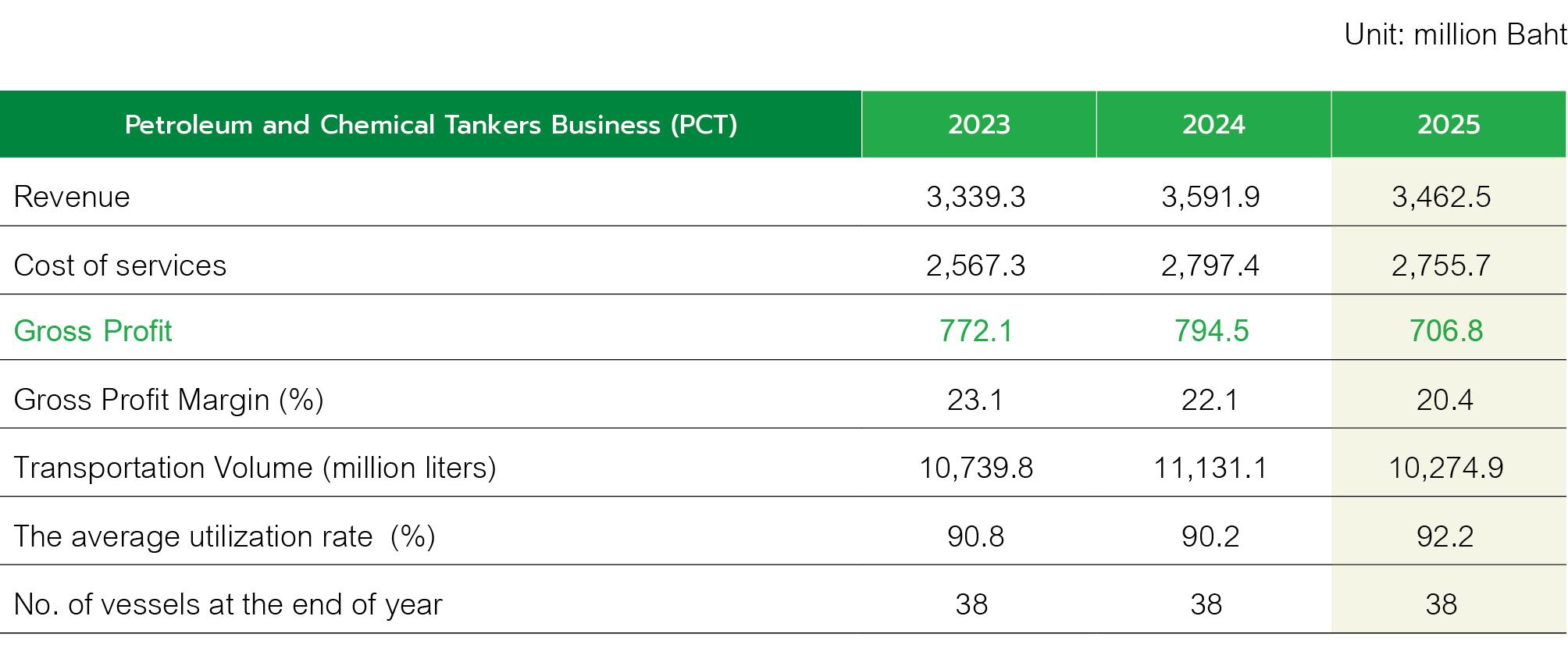
During 2023 – 2025, the PCT business generated revenues of 3,339.3 million baht, 3,591.9 million baht, and 3,462.5 million baht, respectively, accounting for 41.3%, 40.9%, and 39.6% of the Company's total service revenue.
In 2024, revenue grew by 7.6% from the previous year, driven by the full-year recognition of revenue from two chemical tankers that the Company additionally put into service in Q1 and Q4 of 2023, as well as the provision of one additional refined petroleum product tanker in Q2 of 2024 to expand international services under Time Charter contracts, which helped stabilize revenue. Furthermore, in the last quarter of 2024, the Company also benefited from the recovery of the tourism sector, which led to increased demand for aviation fuel (Jet A-1) and consequently boosted the business's revenue in line with higher transport volumes.
Nevertheless, in 2025, revenue decreased by 3.6% from 2024 due to the decommissioning of one old vessel since late 2024, the appreciation of the Thai Baht, which affected revenue from the Company's overseas services with USD-denominated receipts, as well as external factors such as monsoons in the region during the year, major floods in the South, which significantly slowed down economic activities, oil consumption, and the tourism sector, and the tense situation along the Thai-Cambodian border, which required the Company to strictly adjust shipping routes to avoid transport to Cambodia in accordance with government regulations and recommendations, impacting fleet operations during the transition period.
Cost of Services
The main cost of services for this business comprises fuel costs, depreciation, and vessel management fees. For 2023 – 2025, the PCT business incurred costs of 2,567.3 million baht, 2,797.4 million baht, and 2,754.6 million baht, respectively.
In 2024, costs increased by 9.0% from 2023, consistent with fleet expansion, which led to higher depreciation, more vessels undergoing drydocking, higher planned maintenance costs than in 2023, and a slight increase in average fuel costs for navigation. In 2025, the overall cost of services for the PCT business decreased by 42.8 million baht, in line with partially disrupted transport volumes due to the conflict between the Thai and Cambodian borders, as well as the impact of floods in the South, which resulted in reduced oil consumption and a stable number of vessels throughout the year.
Gross Profit and Gross Profit Margin
Gross profit in 2023 – 2025 was 772.1 million baht, 794.5 million baht, and 706.8 million baht, respectively, with gross profit margins of 23.1%, 22.1%, and 20.4%, respectively.
In 2024, gross profit slightly increased in line with revenue growth from the expansion of the fleet serving international markets. However, the gross profit margin in 2024 slightly decreased, reflecting higher depreciation from fleet expansion and increased drydocking expenses in 2024.
In 2025, gross profit decreased by 11% from 2024, resulting from a slowdown in revenue during the second half of the year, affected by climatic factors and geopolitical conflicts. Although the Company endeavored to increase vessel utilization rates and diversify service routes to mitigate negative impacts, some of the expanded service routes had lower gross profit margins than the original routes that the Company had to suspend.
Overall, the PCT business consistently maintained vessel utilization rates above 90%, reflecting its competitive potential, expanded services, aggressive marketing, and fleet management capabilities, amidst a volatile and highly challenging energy industry environment due to factors beyond the Company's control.
Crude Oil Carrier ("COC") Business
Service Revenue
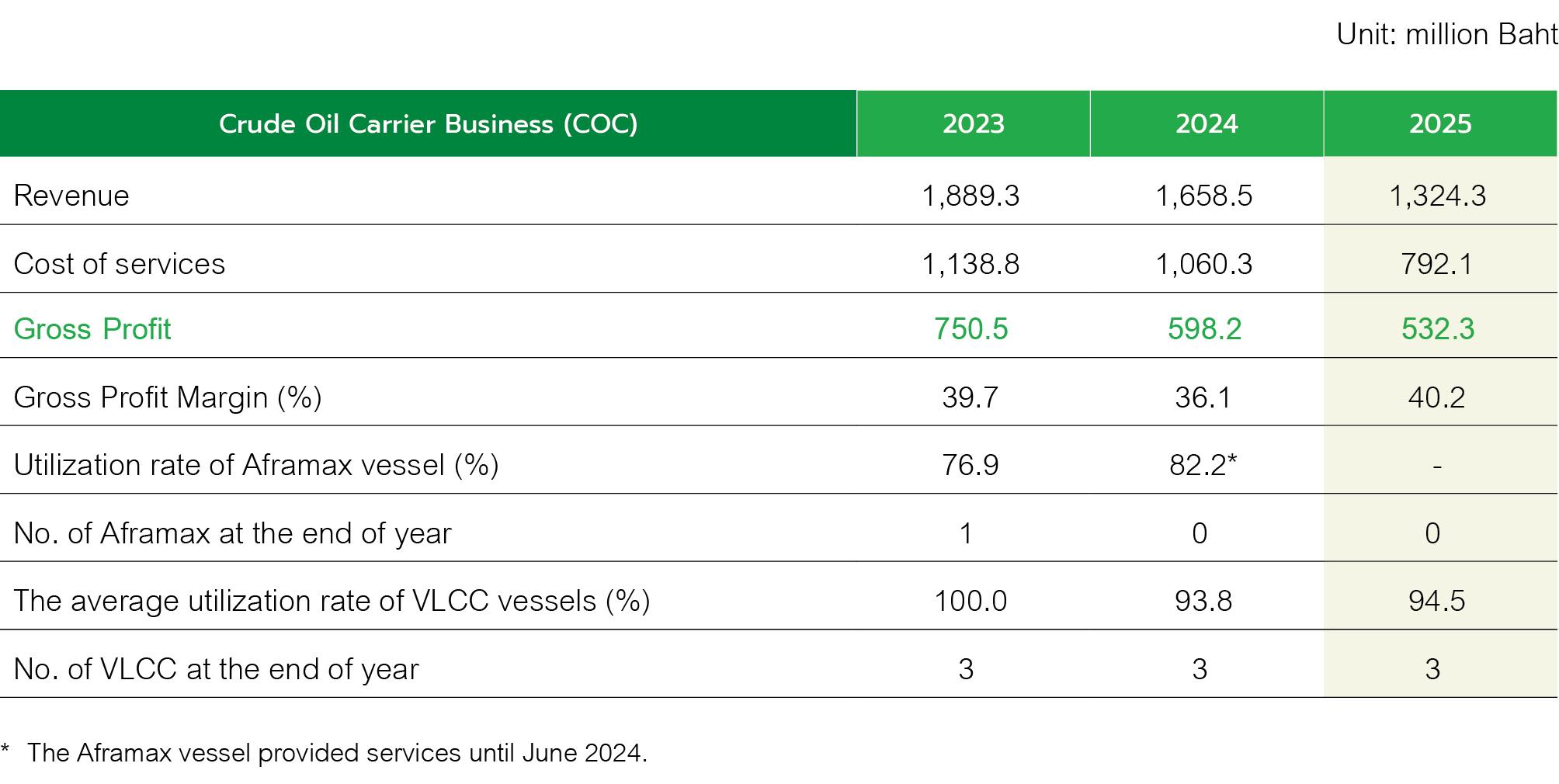
During 2023 – 2025, the COC business generated revenues of 1,889.3 million baht, 1,658.5 million baht, and 1,324.3 million baht, respectively, decreasing due to the strategic restructuring of the service fleet. COC business revenue accounted for 23.4%, 18.9%, and 15.1% of the Company's total service revenue.
In 2024, the COC business experienced a decrease in revenue as the Company removed an Aframax vessel with limited remaining service life from the COC business starting July 2024 for conversion into an FSO vessel, which will then be deployed under the OSV business in a long-term 5+5 year Bareboat contract. In 2025, one VLCC underwent drydocking, and another VLCC was swapped according to customer agreements, resulting in a decrease in the average vessel utilization rate from 2023, which had a full 100% average utilization rate.
In 2025, revenue decreased because the Company still recognized revenue from Aframax vessel services under the COC business for 6 months in 2024 before the vessel was drydocked for conversion as mentioned above. In contrast, in 2025, only 3 VLCC vessels were in service throughout the year. Additionally, in 2025, two VLCC vessels underwent planned drydocking, one in Q1 and another in Q4, which resulted in a lack of revenue recognition during the drydocking periods. Nevertheless, the decrease in revenue was a result of the strategic restructuring of the fleet, sacrificing some short-term revenue to build long-term stability. The Aframax vessel converted into an FSO began generating recurring revenue under the OSV business from late Q1/2025 under a long-term contract, which helps enhance the Company's overall cash flow stability.
Cost of Services
The cost of services for the COC business in 2023 – 2025 was 1,138.8 million baht, 1,060.3 million baht, and 792.1 million baht, respectively, continuously decreasing in line with the number of vessels in service.
In 2024, costs decreased by 6.9% due to the conversion of the Aframax vessel contract from Spot to Time Charter, making the customer responsible for fuel and variable costs, coupled with the cessation of depreciation recognition for the Aframax vessel in the second half of 2024 after its conversion to an FSO.
In 2025, costs decreased in line with the reduced number of vessels and the management of VLCC charter costs. In Q1/2025, the Company successfully negotiated to adjust the calculation method for variable expenses of the VLCC lease agreement to align with actual usage, resulting in a retroactive expense reduction of 150 million baht, which was a one-time item.
Gross Profit and Gross Profit Margin
Gross profit for the COC business in 2023 – 2025 was 750.5 million baht, 598.2 million baht, and 532.3 million baht, respectively, with gross profit margins of 39.7%, 36.1%, and 40.2%, respectively.
In 2024, gross profit decreased by 20.3%, and the gross profit margin declined to 36.1%, due to the impact of removing an Aframax vessel from service in the second half of 2024 and the drydocking of a VLCC, which temporarily reduced revenue-generating capacity.
In 2025, although gross profit decreased in line with the reduced number of vessels in service in this business, the profit structure, including the gross profit margin, improved. This was supported by negotiations to adjust the variable cost terms of the VLCC lease agreement to align with actual usage, leading to an increase in the gross profit margin to 40.2%.
The COC business during 2024 – 2025 was a period of strategic fleet restructuring for the Company, focusing on maximizing the service life of each vessel type. This means that despite a short-term decrease in revenue, it will be able to create long-term financial stability from longer-term contracts.
Floating Storage Unit ("FSU") Business
Service Revenue
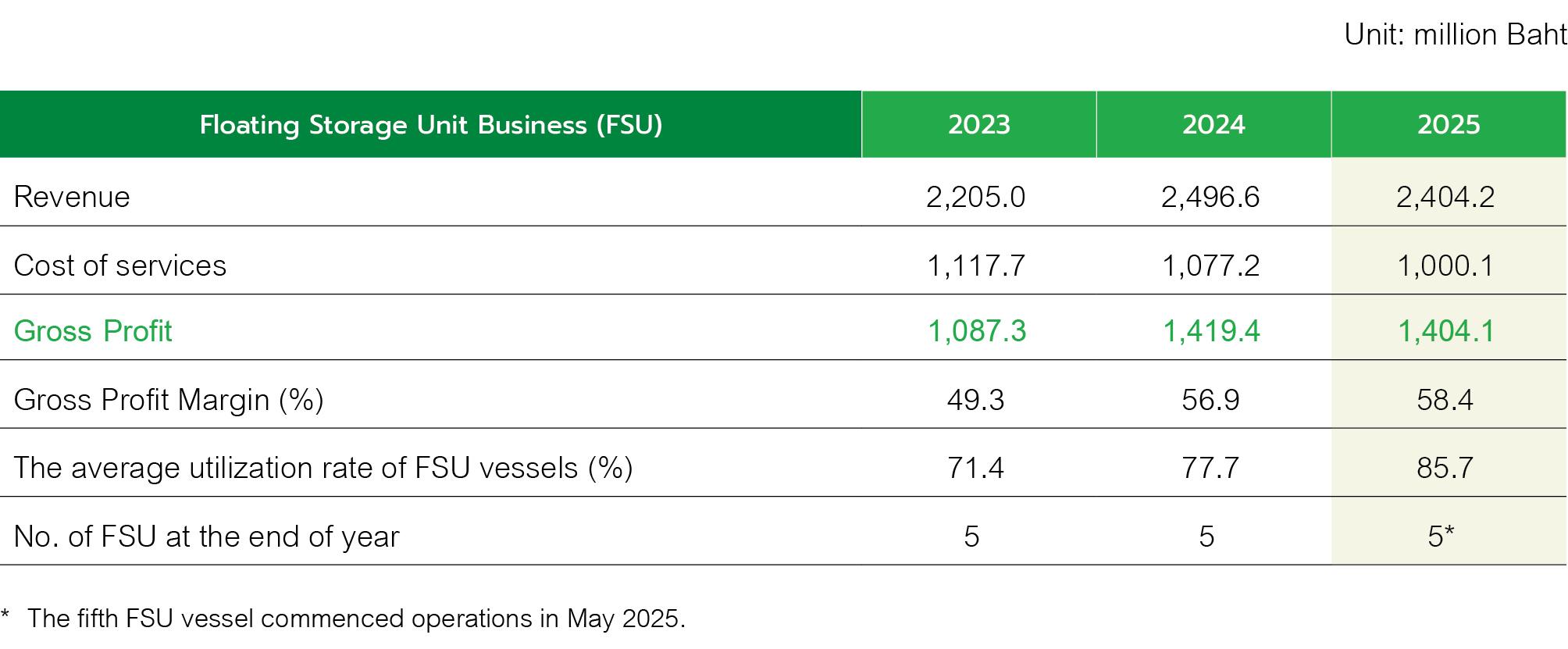
In 2023 – 2025, the FSU business generated revenues of 2,205.0 million baht, 2,496.6 million baht, and 2,404.2 million baht, respectively, accounting for 27.3%, 28.4%, and 27.5% of the Company's total service revenue.
In 2024, the FSU business's revenue increased by 291.6 million baht, or 13.2% from 2023, primarily supported by geopolitical conflicts in the Middle East, which led to increased demand for FSU for oil storage, coupled with the demand for biofuel in accordance with environmental regulations, resulting in an average vessel utilization rate increase to 77.7% from 71.4% in 2023.
In 2025, revenue slightly decreased by 3.7% from 2024, despite an increase in vessel utilization to 85.7%. The main reason was that the new FSU vessel, purchased by the Company to replace the old one, commenced service after the old vessel had been sold, resulting in only 4 FSU vessels in service at the beginning of 2025. Additionally, the Company was affected by the continuous appreciation of the Thai Baht during the year, as FSU vessel revenue is recognized in US dollars. Nevertheless, following the replacement of the new vessel in May 2025, revenue gradually improved in line with higher vessel utilization rates and increased service rates from the new FSU vessel.
Cost of Services
The cost of services in the FSU business for 2023 – 2025 was 1,117.7 million baht, 1,077.2 million baht, and 1,000.1 million baht, respectively.
In 2024, costs decreased by 40.5 million baht, or 3.6% from 2023, consistent with the average LSFO fuel price decreasing from USD 626.2 per ton to USD 612.3 per ton, or approximately 2.3%, as well as efficient cost management.
In 2025, the overall cost of services decreased compared to 2024 due to lower fuel costs, as the Company had only 4 FSU vessels in service at the beginning of 2025.
Gross Profit and Gross Profit Margin
Gross profit in 2023 – 2025 was 1,087.3 million baht, 1,419.4 million baht, and 1,404.1 million baht, respectively, with gross profit margins of 49.3%, 56.9%, and 58.4%, respectively.
In 2024, gross profit significantly increased by 332.1 million baht, or 30.5% from 2023, in line with increased revenue and decreased costs, coupled with higher vessel utilization rates and the benefit from the weakening Thai Baht during the first half of the year.
Meanwhile, in 2025, gross profit slightly decreased from the previous year, consistent with the decline in revenue due to exchange rate impacts and a lower number of vessels in service at the beginning of the year compared to 2024. Nevertheless, gross profit remained high due to increased vessel utilization rates and improved service rates.
The continuously improving gross profit margin reflects the efficiency of fleet management, especially in 2024, when vessel utilization rates increased due to market conditions, while the Company's vessels were ready to serve and meet such demands. In 2025, despite a slight decrease in total revenue due to exchange rates, the gross profit margin still increased due to a high vessel utilization rate of 85.7% and the expansion of new vessels to meet long-term customer demand.
In summary, the FSU business has shown clear improvements in profitability over the past three years. Despite market and exchange rate fluctuations, it has consistently maintained high vessel utilization rates and gross profit margins.
Offshore Support Vessel ("OSV") Business
Service Revenue
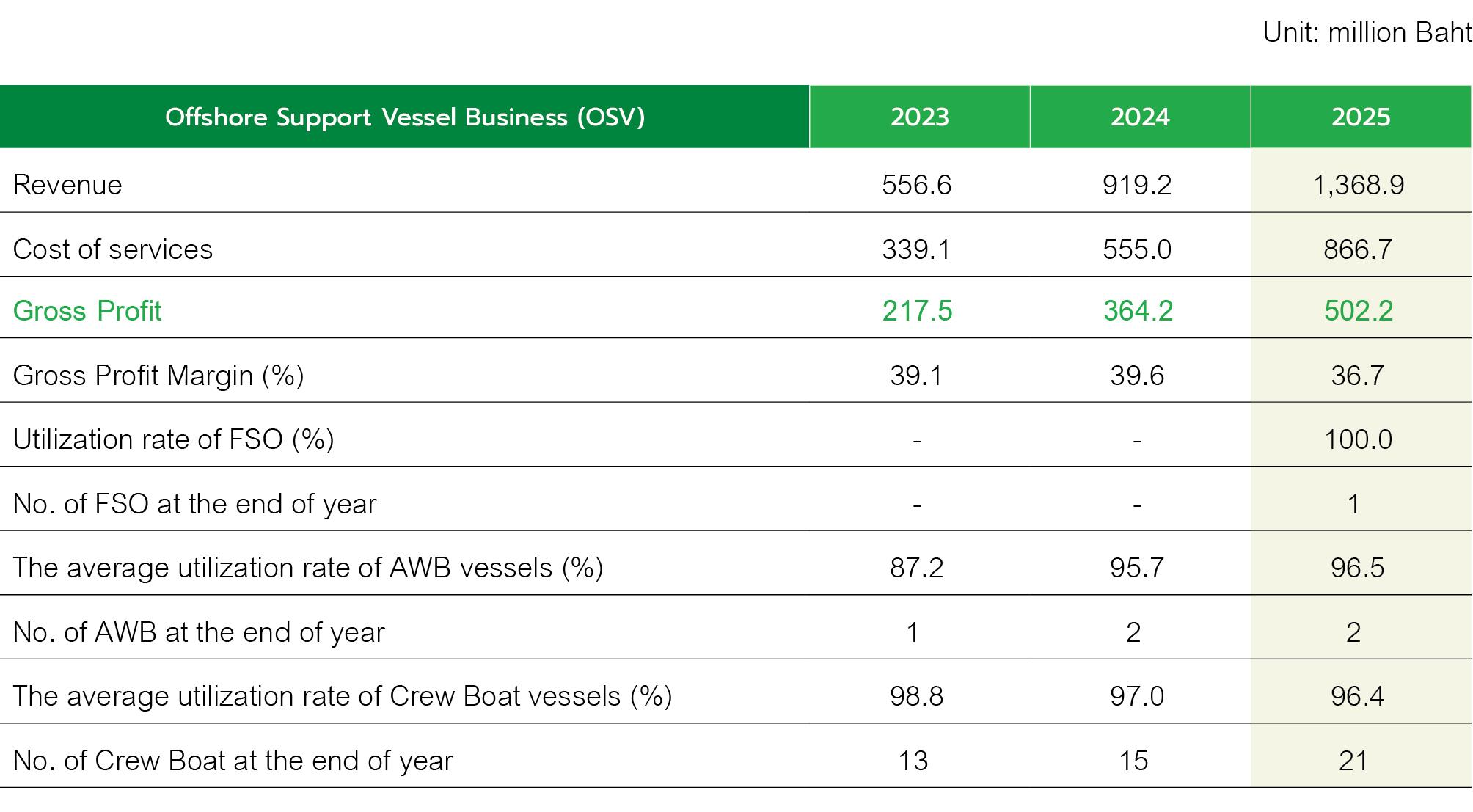
In 2023 – 2025, the OSV business generated revenues of 556.6 million baht, 919.2 million baht, and 1,368.9 million baht, respectively, accounting for 6.9%, 10.5%, and 15.7% of the Company's total service revenue.
In 2024, the OSV business's revenue increased by 362.6 million baht, or 65.2% from 2023, consistent with the expansion of the fleet by 3 vessels, comprising one AWB vessel commencing service in January 2024, and two Hybrid Crew Boats gradually added to service in January and April 2024, respectively. This was coupled with an increased utilization rate of AWB vessels, as the Company had refurbished an AWB vessel in Q1 2023 to support services under a new contract and meet the growing demand from petroleum exploration and production activities in the Gulf of Thailand, resulting in significant revenue growth.
In 2025, revenue continuously increased by 449.7 million baht, or 48.9% from 2024, due to the full-year recognition of revenue from vessels that commenced service in 2024 and the addition of 7 new vessels to the fleet in 2025, which include:
One FSO vessel commenced services for customers in the Gulf of Thailand under a long-term contract in February 2025.
Two Hybrid Crew Boats commenced services for customers in the Middle East under long-term contracts starting January 2025.
Four Crew Boats gradually commenced services for customers in the Gulf of Thailand in March and August 2025, one vessel per month, and an additional two vessels expanded services to Middle Eastern customers under long-term contracts in November 2025.
Cost of Services
The cost of services in 2023 – 2025 was 339.1 million baht, 555.0 million baht, and 866.7 million baht, respectively.
In 2024, costs increased by 216.0 million baht, or 63.7% from 2023, consistent with fleet expansion, leading to the recognition of depreciation for all three new vessels throughout the year, as well as the recognition of drydocking expenses for one AWB vessel in Q4/2024 for a period of one month.
In 2025, costs increased by 311.7 million baht, or 56.2% from 2024, due to the addition of a total of 7 vessels in service as mentioned above. However, the entire OSV fleet operates under Bareboat Charter or Time Charter contracts, which helps reduce the risk of variable service costs, as customers are responsible for such variable expenses, thereby contributing to the Company's profit stability.
Gross Profit and Gross Profit Margin
Gross profit in 2023 – 2025 was 217.5 million baht, 364.2 million baht, and 502.2 million baht, respectively, representing gross profit margins of 39.1%, 39.6%, and 36.7%.
In 2024, gross profit increased by 146.7 million baht, or a growth of 67.4% from 2023, in line with increased revenue from fleet expansion in service. Despite being affected by the drydocking of an AWB vessel late in the year, which prevented the recognition of some revenue, the gross profit margin still slightly improved compared to 2023.
In 2025, gross profit increased by 138.0 million baht, or 37.9% from 2024, due to the full-year recognition of revenue from vessels the Company additionally put into service in 2024 and vessels expanded in 2025. The gross profit margin slightly decreased because some of the additional vessels in service are under long-term bareboat charter contracts, which have lower gross profit margins than services under Time Charter contracts. Nevertheless, bareboat charter contracts are long-term agreements that help create revenue stability, reduce cost volatility, and enhance long-term cash flow stability.
The OSV business has experienced significant growth over the past three years, driven by a timely fleet expansion strategy, consistent with the expanding oil exploration and production activities in the Gulf of Thailand. The Company also focused on increasing the proportion of revenue from long-term contracts. Although the gross profit margin slightly decreased in 2025, the Company is confident that a revenue structure primarily based on long-term contracts will contribute to more stable and sustainable cash flow.
Ship Agent and Shipping ("SAS") Business
Service Revenue
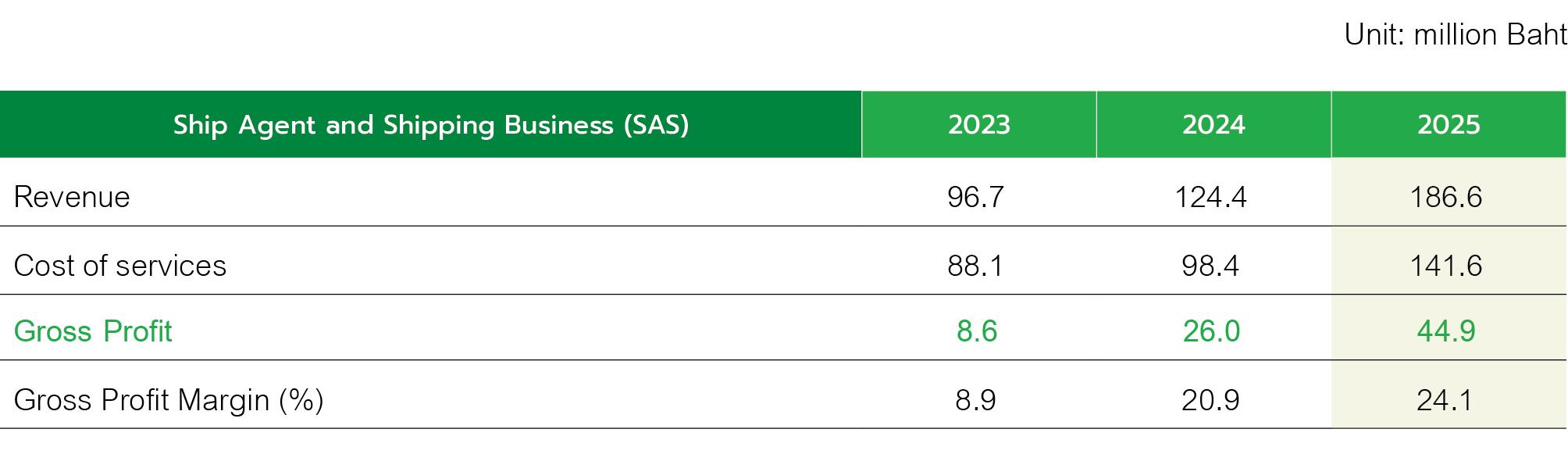
For 2023 – 2025, the SAS business generated revenues of 96.7 million baht, 124.4 million baht, and 186.6 million baht, respectively, accounting for 1.2%, 1.4%, and 2.1% of total service revenue. In 2024, the SAS business's revenue increased by 27.8 million baht, or grew by 28.7% from 2023, due to the expansion of shipping services to industrial clients and the initial recognition of revenue from V.C. Shipping and Service Co., Ltd. (VC) following its acquisition on October 1, 2024. In 2025, revenue significantly increased by 62.1 million baht, or 49.9% from 2024, due to the full-year recognition of revenue from V.C. Shipping and Service Co., Ltd., as well as the expansion of the shipping business's customer base in line with increased import-export volumes, despite a partial decrease in the proportion of Ship Agent work related to large cargo vessels compared to 2024.
Cost of Services
The cost of services for the SAS business in 2023–2025 was 88.1 million baht, 98.4 million baht, and 141.6 million baht, respectively.
In 2024, costs increased by 10.3 million baht, or 11.7% from 2023, consistent with the increase in revenue and the recognition of costs from V.C. Shipping and Service Co., Ltd., which the Company acquired in Q4/2024, as well as higher brokerage fees due to the expansion of shipping operations.
In 2025, costs increased by 43.2 million baht, or 43.9% from 2024, in line with growing work volume and the full-year recognition of costs from V.C. Shipping and Service Co., Ltd. However, efficient cost management and an increased proportion of high-value-added work helped keep the cost increase lower than revenue growth.
Gross Profit and Gross Profit Margin
Gross profit in 2023 – 2025 was 8.6 million baht, 26.0 million baht, and 44.9 million baht, respectively, representing gross profit margins of 8.9%, 20.9%, and 24.1%, respectively.
In 2024, gross profit increased by 17.4 million baht from 2023, due to business expansion and the initial recognition of V.C. Shipping and Service Co., Ltd.'s performance in the last quarter of the year.
In 2025, gross profit continuously increased by 18.9 million baht, or grew by 72.7% from 2024, due to the full-year recognition of revenue from V.C. Shipping and Service Co., Ltd., and the growth of shipping operations coupled with customer base expansion. This occurred despite some periods being affected by a decrease in high-margin Ship Agent work related to VLCC vessels.
The continuous improvement reflects the change in revenue structure from the acquisition of V.C. Shipping and Service Co., Ltd., and efficient cost management. Although some quarters in 2025 saw pressure from a reduced proportion of Ship Agent work, overall for the year, the SAS business significantly improved its profitability.
Other Income
For the fiscal years 2023 - 2025, the Company had other income of 451.8 million baht, 167.0 million baht, and 374.9 million baht, respectively. Details of other income are as follows:
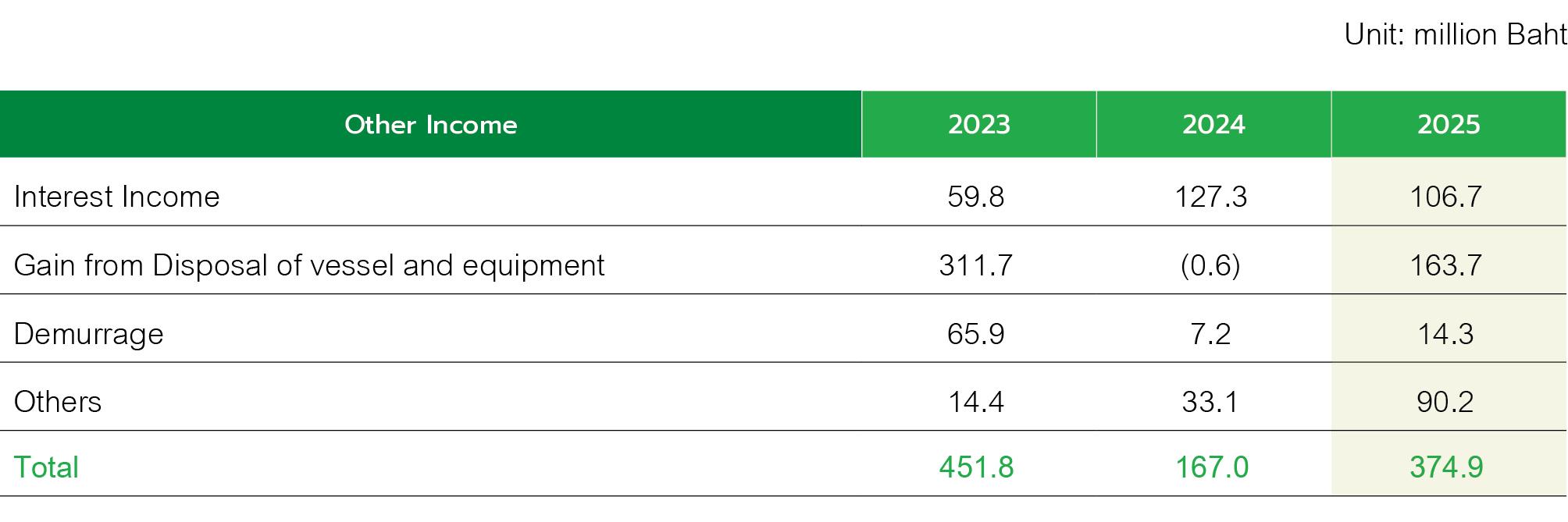
For the fiscal year 2024 compared to 2023, the Company's other income decreased by 284.8 million baht because in 2023, the Company had a profit from the sale of one FSU vessel, whereas in 2024, the Company had no profit from vessel sales. In 2024, the Company's interest income from bank deposits increased by 67.5 million baht due to more efficient cash management.
In 2025, the Company's other income increased by 207.9 million baht, stemming from two factors: profit from the sale of an aging FSU vessel to reduce the average age of the fleet by one vessel in Q1/2025, and other income received from insurance compensation incurred during the year.
Administrative Expenses
The Company's administrative expenses primarily consist of salaries and other benefits, depreciation, maintenance costs, and other office expenses. For the fiscal years 2023, 2024, and 2025, the Company's administrative expenses amounted to 586.0 million baht, 609.4 million baht, and 648.3 million baht, respectively.
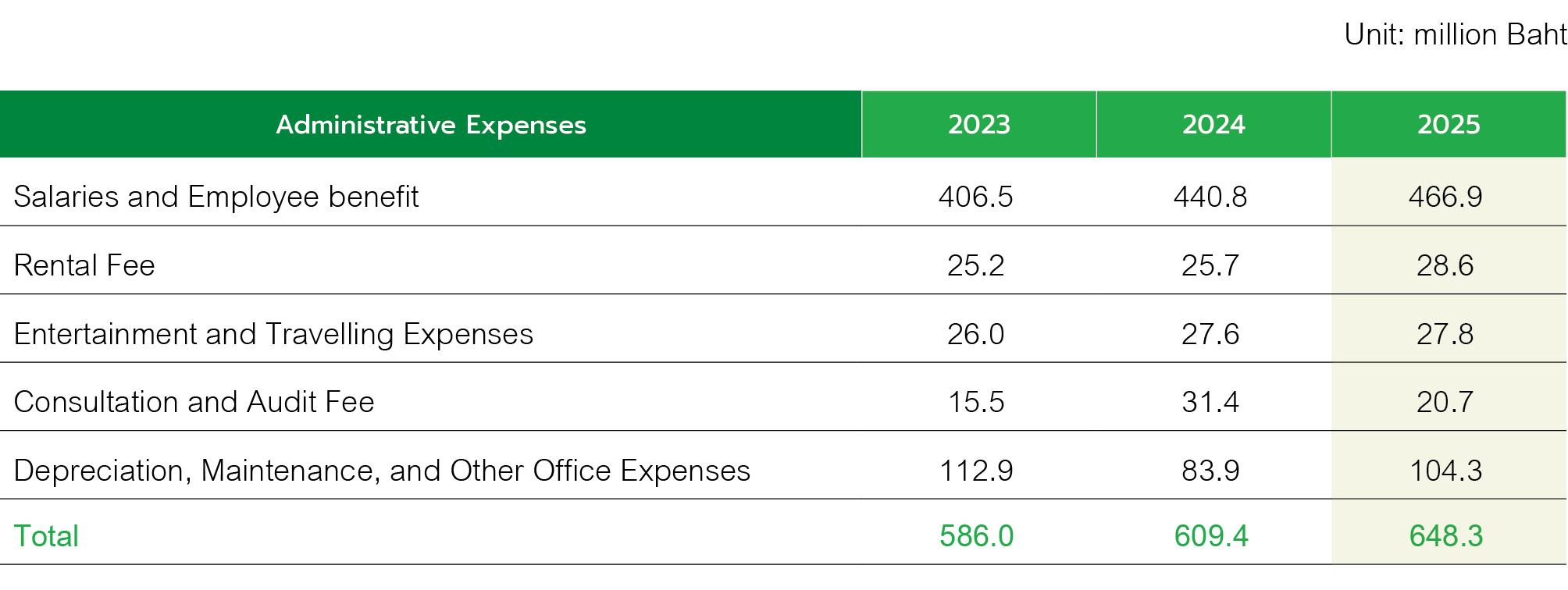
For the fiscal year 2024 compared to 2023, the Company's administrative expenses increased by 22.9 million baht, or 3.9%. The main reason was the recognition of employee salaries and other benefits after the acquisition of V.C. Shipping and Service Co., Ltd. in 2024. Nevertheless, the Company maintained administrative expenses at a similar level throughout the year, averaging approximately 6.9%.
For the fiscal year 2025, the Company's administrative expenses increased by 38.9 million baht compared to 2024, with the significant increase primarily due to the full-year recognition of employee salaries and other benefits, as well as office depreciation, following the acquisition of V.C. Shipping and Service Co., Ltd. in Q4/2024.
Gain (Loss) on Exchange Rate
A portion of the Company's revenue is received in US dollars. To mitigate cash flow risk (cash flow hedge), the Company opted to secure long-term financing from financial institutions, also in US dollars. However, accounting standards require the Company to recognize 1) realized gains or losses from exchange rates, arising from the difference between the exchange rate on the transaction date and the payment date, and 2) unrealized gains or losses from exchange rates, arising from the difference between the exchange rate on the transaction date and the financial statement closing date. The volatility in exchange rate gains or losses primarily stems from the accounting recognition related to long-term US dollar loans and the conversion of US dollar deposits into Thai Baht at the financial statement closing date. Details of exchange rate gains or losses for 2023, 2024, and 2025 are as follows:
For the fiscal year 2023, the Company incurred an exchange rate loss of 15.1 million baht due to a slight appreciation of the Thai Baht against the US dollar, compared to the previous year.
For the fiscal year 2024, the Company reported an exchange rate gain of 22.2 million baht, resulting from the recognition of profit from exercising rights in forward foreign exchange contracts for the investment in purchasing vessels.
For the fiscal year 2025, the Company incurred a net exchange rate loss of 136.4 million baht, resulting from the appreciation of the Thai Baht against the US dollar during the year. A portion of this loss is an unrealized loss, representing only a loss arising from accounting valuation.
Financial Costs
For the fiscal years 2023, 2024, and 2025, the Company's financial costs amounted to 320.4 million baht, 325.2 million baht, and 359.0 million baht, respectively, showing an increase throughout all three years, consistent with the Company's investments in business and fleet expansion.
For the fiscal year 2024 compared to 2023, the Company's financial costs increased by 4.8 million baht, or 1.5%, due to borrowing from financial institutions to expand the OSV fleet, oil tankers, and FSU vessels in 2024.
For the fiscal year 2025, the Company's financial costs increased by 33.8 million baht due to the expansion of the OSV fleet by 7 vessels during 2025 and the full-year recognition of financial costs from investment projects that commenced in late 2024.
Share of Profit (Loss) from Investments in Associates and Joint Ventures
For the years 2022, 2023, and 2024, the Company's share of profit (loss) from investments in associates and joint ventures amounted to 26.3 million baht, 15.9 million baht, and 14.2 million baht, respectively.
In 2023, the Company had a share of profit (loss) from investments in associates and joint ventures, with details as follows: TMN 25.1 million baht and BMS 1.2 million baht. On November 9, 2023, the shareholders of Bongkot Marine Service Co., Ltd. (BMS) resolved to dissolve the company. The joint venture registered its dissolution with the Ministry of Commerce on November 10, 2023, and the liquidation process is not yet complete. In December 2023, the joint venture had already returned capital to the Company and one of its subsidiaries, totaling 180.57 million baht.
In 2024, the Company had a share of profit (loss) from investments in associates and the TMN joint venture, which was an operating profit of 15.9 million baht, based on an equity stake of 27.9%.
In 2025, the Company had a share of profit (loss) from investments in associates and the TMN joint venture, which was an operating profit of 14.2 million baht, based on an equity stake of 27.9%.
Net Profit and Net Profit Margin
For the fiscal years 2023 – 2025, the Company reported net profits of 2,214.0 million baht, 2,249.0 million baht, and 2,283.7 million baht, respectively, representing net profit margins of 27.4%, 25.6%, and 26.1%, respectively, reflecting consistently strong and stable profitability.
In 2024, the Company's net profit increased by 35.0 million baht, or 1.6% from the previous year, with the entire net profit for 2024 being operational profit. When compared to the operational net profit of 2023, which excluded the extraordinary gain from the sale of vessels amounting to 312.2 million baht, the operational net profit in 2024 grew by 18.2%, reflecting strong revenue quality and genuine growth from core businesses.
For 2025, the Company reported a net profit of 2,283.7 million baht, an increase of 1.5% from 2024. This was supported by continuous fleet expansion and enhanced service capabilities, as well as the recognition of profit from the sale of an aging FSU vessel to reduce the average age of the fleet and improve long-term operational efficiency. However, the appreciation of the Thai Baht throughout the year resulted in exchange rate losses and affected the value of US dollar-denominated revenue when converted to Thai Baht, thereby limiting net profit growth compared to the Company's true operational potential.
Liquidity & Capital Adequacy
Cash flow from operating activities
For the fiscal year 2023, the Company's net cash provided by operating activities amounted to Baht 3,258.3 million, primarily due to profit before income tax of Baht 2,392.6 million and adding back depreciation and amortization of Baht 1,299.7 million. However, the Company had cash used in changes in operating assets and liabilities totaling Baht 374 million, primarily due to an increase (decrease) in trade and other receivables and trade and other payables of Baht (214.5) million and Baht 138.4 million, respectively, as well as income tax payments of Baht 216.3 million, for the most part, resulting in the Company's net cash provided by operating activities amounting to Baht 3,258.3 million.
For the fiscal year 2024, the Company's net cash provided by operating activities amounted to Baht 4,011.8 million, primarily due to profit before income tax of Baht 2,473.1 million and adding back depreciation and amortization of Baht 1,434.1 million. However, the Company had cash used in changes in operating assets and liabilities totaling Baht 105.7 million, primarily due to an increase (decrease) in trade and other receivables and trade and other payables of Baht (397.7) million and Baht 415.3 million, respectively, as well as income tax payments of Baht 170.3 million, for the most part, resulting in the Company's net cash provided by operating activities amounting to Baht 4,011.8 million.
For the fiscal year 2025, the Company's net cash provided by operating activities amounted to Baht 3,872.8 million, primarily due to profit before income tax of Baht 2,435.6 million and adding back depreciation and amortization of Baht 1,700.6 million. However, the Company had cash used in changes in operating assets and liabilities totaling Baht 388.3 million, primarily due to an increase (decrease) in trade and other receivables and trade and other payables of Baht (22.7) million and Baht (188.5) million, respectively, as well as income tax payments of Baht 238.7 million, for the most part, resulting in the Company's net cash provided by operating activities amounting to Baht 3,872.8 million.
Cash flow from investing activities
For the fiscal year 2023, the Company's net cash used in investing activities amounted to Baht 531.3 million, primarily due to (1) cash paid for the purchase of vessels and equipment totaling Baht 1,867.3 million, (2) cash received from the sale of equipment and vessels totaling Baht 1,057.1 million, (3) cash received from the return of investment in joint ventures totaling Baht 182.0 million, (4) a decrease in restricted bank deposits of Baht 48.1 million, and (5) cash from interest received totaling Baht 48.8 million.
For the fiscal year 2024, the Company's net cash used in investing activities amounted to Baht 3,359.5 million, primarily due to (1) cash paid for the purchase of vessels and equipment totaling Baht 3,330.3 million, (2) cash received from the sale of equipment and vessels totaling Baht 9.9 million, (3) cash received from the return of investment in joint ventures totaling Baht 4.3 million, (4) cash paid for the acquisition of a subsidiary, net of cash acquired, totaling Baht 125.0 million, (5) cash paid for investment in an associate totaling Baht 18.2 million, (6) dividends received totaling Baht 4.6 million, and (7) cash from interest received totaling Baht 95.2 million.
For the fiscal year 2025, the Company's net cash used in investing activities amounted to Baht 1,650.5 million, primarily due to (1) cash paid for the purchase of vessels, equipment, and intangible assets totaling Baht 2,388.0 million, (2) cash received from the sale of equipment and vessels totaling Baht 620.0 million, (3) dividends received totaling Baht 7.4 million, and (4) cash from interest received totaling Baht 110.5 million.
Cash flow from financing activities
For the fiscal year 2023, the Company's net cash used in financing activities amounted to Baht 2,498.0 million, primarily due to (1) cash received from long-term loans from financial institutions totaling Baht 845.6 million, (2) payments for long-term loans from financial institutions and lease liabilities totaling Baht 2,058.7 million, (3) dividend payments totaling Baht 945.2 million, (4) interest expenses totaling Baht 314.5 million, and (5) net cash paid for long-term loans from related parties in proportion to the joint operation under the name “CNNC Joint Venture” in the consolidated financial statements totaling Baht 25.2 million.
For the fiscal year 2024, the Company's net cash used in financing activities amounted to Baht 676.6 million, primarily due to (1) cash received from long-term loans from financial institutions totaling Baht 3,272.0 million, (2) payments for long-term loans from financial institutions and lease liabilities totaling Baht 1,841.2 million, (3) dividend payments totaling Baht 1,303.0 million, (4) interest expenses totaling Baht 288.3 million, (5) net cash paid for long-term loans from related parties in proportion to the joint operation under the name “CNNC Joint Venture” in the consolidated financial statements totaling Baht 32.0 million, (6) net cash received from short-term loans from financial institutions totaling Baht 730.0 million, and (7) cash paid for treasury stock purchases totaling Baht 1,214.1 million.
For the fiscal year 2025, the Company's net cash used in financing activities amounted to Baht 2,398.1 million, primarily due to (1) cash received from long-term loans from financial institutions totaling Baht 2,154.6 million, (2) payments for long-term loans from financial institutions and lease liabilities totaling Baht 2,115.0 million, (3) dividend payments totaling Baht 1,203.0 million, (4) interest expenses totaling Baht 368.3 million, (5) net cash paid for long-term loans from related parties in proportion to the joint operation under the name “CNNC Joint Venture” in the consolidated financial statements totaling Baht 44.0 million, (6) net cash paid for short-term loans from financial institutions totaling Baht 150.0 million, and (7) cash paid for treasury stock purchases totaling Baht 672.4 million.
Asset Management Capability
As of December 31, 2023, 2024, and 2025, the Company's total assets amounted to Baht 20,716.0 million, Baht 23,045.3 million, and Baht 22,704.4 million, respectively. Key assets include cash and cash equivalents, trade and other receivables, land, buildings, and vessels, right-of-use assets, goodwill, and investments in associates and joint ventures, among others.
As of December 31, 2024, compared to the fiscal year 2023, total assets increased by Baht 2,329.3 million or 11.3 percent. The main reason was an increase in land, buildings, equipment, and vessels by Baht 2,355.2 million, due to the purchase of 2 Crew boats, 1 small oil tanker, 1 FSU vessel, and major machinery equipment, which increased from the modification of another FSO vessel. The Company's cash and cash equivalents decreased by Baht 12.9 million, primarily due to a decrease in cash received from operations and long-term borrowings from financial institutions, net of a decrease in cash from the payment for vessel purchases as capital, cash from the repurchase of treasury shares, cash paid for the acquisition of shares in the indirect subsidiary, V.C. Shipping and Service, repayment of loans and interest, and payment of dividends. Trade and other receivables increased by Baht 391.0 million, due to trade receivables from Port Authority of Thailand of the CNNC joint venture, the expansion of additional vessel services during the year, as well as trade and other receivables arising from business acquisitions.
As of December 31, 2025, compared to the fiscal year 2024, total assets decreased by Baht 340.9 million or 1.5 percent. The main reason was an increase in land, buildings, equipment, and vessels by Baht 581.5 million, due to the purchase of 6 Crew boats and major machinery equipment, which increased from the modification of another FSO vessel. The Company's cash and cash equivalents decreased by Baht 348.2 million, primarily due to a decrease in cash received from operations and long-term borrowings from financial institutions, net of a decrease in cash from the payment for vessel purchases as capital, cash from the repurchase of treasury shares, repayment of loans and interest, and payment of dividends. Bunker oil and consumables decreased by Baht 77.4 million, due to the market-adjusted decrease in the value of bunker oil remaining on vessels, coupled with the appreciation of the Thai Baht, which resulted in a decrease in the value of bunker oil of overseas subsidiaries when converted to Thai Baht.
Material & Related-Party Transactions
For the year ended December 31, 2025, the Company and its subsidiaries did not conduct any material transaction. Information regarding related party transactions has been disclosed in compliance with the regulations of the Stock Exchange of Thailand (SET), with further details available in section 9.2.
Debt Securities with Financial Ratio Requirements
Debt Securities with Financial Ratio Requirements Issued?
No
Factors That May Affect Financial Condition
Factors or Incidents That May Materially Affect Financial Condition
Petroleum and Chemical Tankers ("PCT") Business and Crude Oil Carrier ("COC") Business In 2025, the overall demand for refined petroleum products and petrochemicals in Thailand and Southeast Asia continues to grow. Although economic expansion remains limited in some countries, economic activities, the growth of the manufacturing sector, international trade, and the recovery of the tourism sector are all crucial factors supporting energy demand in the region. For Thailand, the demand for refined petroleum products remains stable, particularly for diesel, which is the primary energy source for the transportation and logistics sectors, as well as aviation fuel, which has increased in line with the recovery of the tourism sector and the aviation industry.
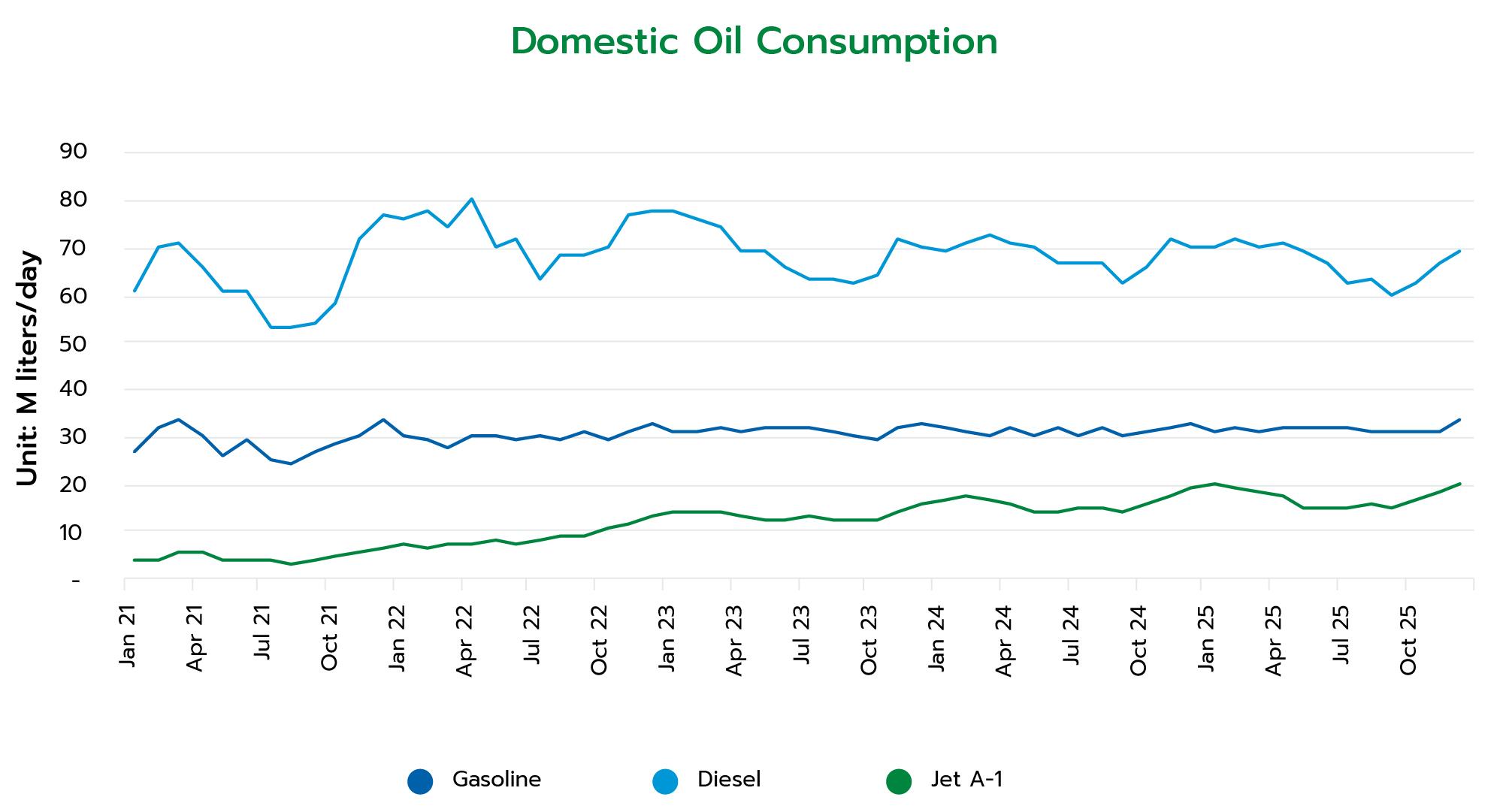
Regionally, Southeast Asia remains one of the world's high-growth energy markets, driven by key supporting factors such as urban population expansion, the rise of the middle class, growth in the manufacturing sector, and infrastructure development in various countries in the region, such as Indonesia, Vietnam, and the Philippines, all of which have continuously increasing energy demands in the transportation, manufacturing, and petrochemical industries.
Furthermore, the recovery of the tourism sector in many countries in the region has significantly increased fuel demand in the aviation and transportation sectors, especially in Thailand, which remains one of the main destinations for international tourists. This has led to a rise in demand for aviation fuel and domestic transportation fuels in line with travel and related economic activities.
Although the long-term energy market will be influenced by the energy transition trend and the rise of electric vehicles, in the medium term, the demand for refined petroleum products and petrochemicals in the region is still expected to grow, especially in developing countries where per capita energy consumption remains low compared to developed countries.
Given these trends, the maritime transportation industry, particularly the transport of refined petroleum products, crude oil, and petrochemicals, continues to play a crucial role in supporting the region's energy supply chain. The Company believes that the demand for energy transport vessel services will continue to grow in line with economic expansion, international trade, and energy demand in Southeast Asia in the long term.
With continuous business experience and fleet development, the Company is well-prepared to meet market demands and achieve stable growth alongside sustainable development in the future.
Floating Storage Unit ("FSU") Business
Global Oil Market Outlook for 2025: The global oil market continues to face volatility from macroeconomic factors, geopolitics, and the energy transition trends of many countries. Global oil demand continues to grow, albeit at a slower rate, primarily supported by emerging economies in Asia.
Although the growth in oil demand in many developed countries is beginning to slow due to environmental policies, energy transition, and increased use of alternative energy, the Asian region remains a key center for global oil demand growth.
Particularly in Southeast Asia, where economic activities are expanding, industrial investments are increasing, and the tourism sector is recovering, leading to a continuous rise in demand for refined petroleum products such as gasoline, diesel, and aviation fuel. Concurrently, most Asian countries still heavily rely on crude oil imports from abroad, making international energy trade, including oil transportation and storage, crucial to the region's energy system.
Under market conditions characterized by price volatility, the demand for energy infrastructure continues to play a crucial role in supporting the region's energy supply chain, thereby promoting the need for oil storage. Particularly during periods of increased oil supply or price fluctuations, oil traders and energy operators often require more oil storage services, both onshore and in the form of floating storage units (FSUs), to manage reserves and enhance flexibility in energy trade management.
Future Outlook: Although the energy transition and environmental policies in many countries may lead to a slowdown in the growth of oil demand in the long term, in the medium term, the Asian region, especially Southeast Asia, is still expected to grow due to economic expansion, infrastructure development, and increased trade and tourism activities. These factors are anticipated to continue supporting the demand for oil storage for energy security and the continuous economic drive in the region.
Offshore Support Vessel ("OSV") Business The trend of the offshore petroleum exploration and production industry in the Gulf of Thailand continues to play a crucial role in Thailand's energy security. Operators continue to invest in developing existing production fields and continuously improving production efficiency to maintain natural gas production levels. Furthermore, the Middle East remains one of the largest energy-exporting regions with the highest energy investments globally. Major energy-producing countries continue to plan long-term increases in oil and natural gas production capacity, leading to a continuous increase in demand for offshore support vessels, such as personnel transport vessels and operational support vessels. Given these factors, the industry for providing support vessels for petroleum exploration and production and offshore support vessels continues to have growth opportunities in line with the expansion of the energy industry in the region.
Business Operations under the Sustainable Development Framework (ESG)
The Company prioritizes sustainable business operations, considering environmental, social, and good governance (ESG) impacts to build confidence among all stakeholders. Clear environmental targets have been set to achieve Carbon Neutrality in Scopes 1 and 2 by 2030 and to strive for Net Zero greenhouse gas emissions by 2050. The Company is committed to studying innovations to enhance energy utilization, manage its fleet efficiently and environmentally friendly, comply with international maritime safety standards, develop personnel capabilities, and conduct business with transparency and good governance. Based on these factors, the Company is confident that its diversified revenue structure, sustainable customer base, and long-term service contracts across various businesses will help maintain operational stability and foster long-term sustainable growth.